
'India's military posture has become significantly stronger than China's on the 3,500-kilometre Line of Actual Control.' 'This is enhancing confrontation between the two sides,' points out Ajai Shukla.
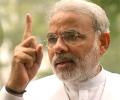
To be sure, Modi is no Vajpayee; at least that is the impression he gives. However, this doesn't mean that he will be looking for a fight. All it means is that if Pakistan seeks a fight, he will not back down. What it also means is that the pusillanimous approach of the previous governments to ceaseless provocations from Pakistan will probably change, says Sushant Sareen.
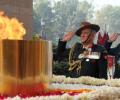
"The force is to maintain peace and tranquillity at the border but it will not shy away from flexing its muscles, if the need be," Gen Rawat said.
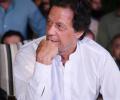
The country's top security body "concluded that India has committed uncalled for aggression to which Pakistan shall respond at the time and place of its choosing," it added.

'Indira Gandhi proved herself a great war leader, but failed as a statesman,' says Colonel Anil A Athale (retd).

China has long coveted Arunachal Pradesh, which it calls Southern Tibet. But, as Venkataraghavan Subha Srinivasan explains, in 1947, the present state of Arunachal Pradesh constituted the North East Frontier Tract of Assam. When India adopted its Constitution on 26 January 1950, NEFT became 'a separate politico-administrative entity' although it was constitutionally still a part of Assam. Its administration was brought directly under the President of India with the Governor of Assam acting as his agent. A revealing excerpt from his book The Origin Story of India's States.

Arpi deserves to be complimented for the commitment and hard work that have gone into this production. The frustrations of seeking reliable documentation from the catacombs of the Indian bureaucracy did not deter him from going after the best information available, and the result is one that he can take much satisfaction in. Ambassador Prabhat P Shukla, Member Advisory Council, Vivekananda International Foundation, reviews Claude Arpi's The End of an Era: India Exits Tibet.

Prime Minister Narendra Modi's visit to Arunachal Pradesh on Friday, February 20, irritated the Chinese government so much that it summoned the Indian ambassador to register its protest against Modi visiting a territory China claims as Southern Tibet.

Narrowing of differences on competing territorial claims along the un-demarcated LAC might take weeks, if not months, of hard-nosed negotiations. Without some give and take on both sides, the impasse will be hard to resolve, observes Virendra Kapoor.
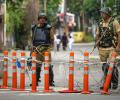
'India needs to closely monitor the discussions at the UNSC and make counter-measures as this touches its core interests', points out Srikanth Kondapalli.

'NSA Doval and the PM are known to admire Israel's tough response to cross-border terrorism.' 'However, New Delhi's situation is far more complex than Tel Aviv's, which enjoys military superiority over all its neighbours,' says Ajai Shukla.

'The need of the hour is to build on the positives and control the negatives,' says Colonel (Dr) Anil A Athale (retd).

India and China on Friday agreed to seek a "political" solution to the border dispute at the earliest as Prime Minister Narendra Modi asked Beijing to "reconsider its approach on some issues" and announced CBMs like e-visa for Chinese tourists and operationalisation of hotline between two militaries.

This is the first time Pakistan and Kashmir have been brought into the narrative.
Clinton, who lost to President Donald Trump in the 2016 elections, claimed that both Russia and China are benefitting from his weak foreign policy.

The government on Tuesday asserted in Lok Sabha that it will not allow anti-national acts.

Against the backdrop of Pakistan's opposition to American drone strikes, United Nations chief Ban Ki-moon on Tuesday said the pilotless aircraft should be used only for gathering intelligence.
Future conflict will involve bypassing of frontiers to strike at critical vulnerabilities directly and in the hinterland at the appropriate time, explains Lieutenant General Anil Chait (retd), who served as chief of the Integrated Defence Staff and Central Army Commander.

The festering dispute over the accession of Jammu and Kashmir stands out as one of the world's most volatile fault lines that divides regions, countries, societies, communities and ethnic groups, notes Mohammad Sayeed Malik, the distinguished commentator on Kashmir affairs, on Sheikh Abdullah's 39th death anniversary.
Experts have said the economic cost of China's misadventure in the last couple of months in eastern Ladakh and South China will be "massive" as it has "exposed" Beijing's "real face" when the entire world is fighting coronavirus.

China plans to divert about 200 billion cubic metres of water annually from the Brahmaputra at its highest point, namely the Great Bend, where it turns into India. China's Brahmaputra dam will severely impact India, warns former senior RA&W officer and China expert Jayadeva Ranade.

The residents of the village will not celebrate Diwali as a mark of tribute to the army soldier who was killed and mutilated by Pakistani terrorists.
'What has changed is the desperation of Pakistan proxies and the separatists in their failure to foment violence and civilian casualties in Kashmir.'

'New Delhi showed itself willing -- at least for a period -- to tolerate the risk of conflict and to withstand Beijing's implicit and explicit threats.' 'But it also continued to try to cut some kind of deal with China to reduce tensions.'

The reduction of tension on the Chinese border may have reduced the urgency of a Biden-Modi meeting, but the sooner Modi starts a bromance with Biden the better as he had done with Obama and Trump, suggests Ambassador T P Sreenivasan.

'The crisis has strengthened America's resolve to work towards building its relationship with India as a bulwark against Chinese aggression'
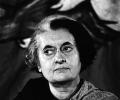
'According to me, her finest hour was in 1983-1984 when she neutralised a combined US-Pakistan-British conspiracy to Balkanise India by creating an independent Sikh State of Khalistan,' says Colonel Anil A Athale (retd). A special assessment of Indira Gandhi on her centenary.

'I don't see how any Indian government or any Indian military leadership can now ask the soldiers to patrol without weapons.'

'They know that India is no pushover.' 'We have to be extremely vigilant, remain ready and keep strengthening our positions.' 'We have to be militarily strong, whatever be the cost.'

'A firm national resolve can only deter and defeat the nefarious designs of the adversary,' notes Rup Narayan Das.

The US had also said there was an "urgent need" for dialogue among all actors to reduce tensions and to avoid a potential military escalation in South Asia.
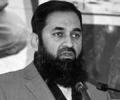
Pakistan on Thursday said Most Favoured Nation status cannot be granted to India at a time when there is tension on the borders.

"All our investigation agencies have full-fledged autonomy...There is no interference from our side or from the government's side," he said while interacting with reporters on the sidelines of a Border Security Force event in New Delhi.

The strategic success of the surgical strikes has not matched their brilliant tactical achievement, says Shekhar Gupta.

Against the backdrop of the standoff between Indian and Chinese troops in eastern Ladakh, the White House press secy said the United States was closely monitoring the current situation and supports its peaceful resolution.

To bolster its arsenal amid recurring incidents of incursions by Chinese troops, India has sought the latest versions of unmanned aerial vehicles -- both the armed and surveillance -- from the United States.
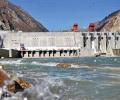
"The reservoir capacity of the project is less than 0.02 per cent of the average annual runoff of the Yarlung Zangbo-Brahmaputra. It cannot have an adverse impact on the downstream," Chinese foreign ministry said to a question on concerns over the dam.

'The Chinese mindset and approach to India is far different from that in Pakistan.' 'This reality makes it possible for us to follow an engagement policy with one, while militating against engagement with the other.'

Jaswant speak of his new book India At Risk, Mistakes, Misconceptions and Misadventures of Security Policy and explains to Sheela Bhatt why India is at risk.

The recoveries made from the gunned-down terrorist included two assault rifles along with two magazines and 234 rounds of bullets, five pistols with 10 magazines and 60 rounds, 15 hand grenades and 12 fuses for IEDs.
